Cable TV was the only real option for live television for decades. In 2026, IPTV has matured into a genuine alternative — but “alternative” doesn’t automatically mean “better for everyone.” Here’s a detailed, honest comparison across the factors that actually affect your monthly bill and daily viewing experience.

Side-by-Side Comparison
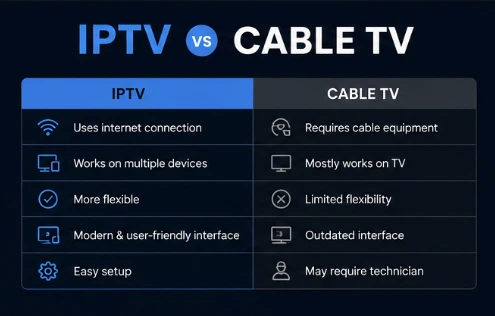
| Factor | Cable TV | IPTV |
|---|---|---|
| Typical monthly cost | $80-150+ with bundles | Significantly lower flat rate |
| Equipment | Set-top box rental (~$10-25/mo extra) | None — uses devices you own |
| Installation | Technician visit required | Self-setup, 5-10 minutes |
| Contract | Often 12-24 months, early termination fees | Usually monthly/yearly, no lock-in |
| Channel flexibility | Fixed bundles, pay for unwanted channels | Broader packages, less forced bundling |
| Multi-device use | Extra box needed per TV, extra fee | Same subscription across devices (per plan limits) |
| Weather resilience | Cable generally stable; satellite affected by storms | Depends entirely on your home internet reliability |
| Picture quality | Consistent, not internet-dependent | HD/4K possible, but requires strong sustained internet speed |
1. The Real Cost Breakdown
A typical cable bill isn’t just the advertised package price. Add equipment rental, regional sports fees, broadcast TV fees, and taxes, and a “$70/month” plan often lands closer to $95-110 on the actual invoice. IPTV pricing is usually all-in — what you see is what you pay, with no separate box rental or hidden regional fees. Compare current plans and pricing directly.
2. Channel Selection: Bundles vs. Broader Access
Cable forces tiered bundles — want one specific international channel or a niche sports package? You often have to upgrade an entire tier. IPTV providers typically offer:
- Local US/Canada networks in HD
- Regional and national sports coverage, often without separate PPV upcharges for certain events
- Movie and series VOD libraries alongside live channels
- International channels from dozens of countries in one package
See the complete channel list to compare against your current cable lineup.
3. Installation & Hardware
Cable installation means scheduling a technician window (often a multi-hour arrival estimate), drilling or running cable lines, and configuring a set-top box. IPTV setup is self-service: install a player app on a device you already own — Firestick, Smart TV, phone, or PC — and enter your login credentials. Most people are watching within 10 minutes.
4. Contract Terms & Cancellation
Cable contracts commonly run 12-24 months with early termination fees that can reach $100-300 depending on the provider and how far into the contract you cancel. IPTV subscriptions are typically billed monthly or annually with no penalty for stopping — genuinely useful if your viewing habits change seasonally (e.g., heavier sports viewing in fall/winter).
5. Streaming Quality & Reliability
This is the most misunderstood comparison point. Cable’s picture quality is consistent because it doesn’t depend on your home network — a coaxial signal doesn’t buffer. IPTV quality is directly tied to your internet connection: with 25+ Mbps sustained and a wired connection, IPTV can match or exceed cable’s HD/4K quality. With a weak or shared WiFi connection, it will buffer regardless of the provider’s server quality. This is the tradeoff: potentially better quality and much lower cost, in exchange for depending entirely on your internet being solid.
6. Customer Support Experience
Cable companies are large corporations with call-center support — often long hold times, though backed by regulatory consumer protections. IPTV providers vary widely: some offer fast live chat/WhatsApp support, others are slow or unresponsive. This is worth testing directly during a trial before committing to a full year.
Frequently Asked Questions
Is IPTV legal in the USA and Canada?
Using IPTV services with properly licensed content is legal. The legal gray area involves specific unlicensed content — stick with established providers who are transparent about their content sourcing.
Do I need special hardware?
No — a Smart TV, Firestick, smartphone, or computer with a stable internet connection is all you need.
Can I test before switching from cable?
Yes, most providers offer a short trial period — test it alongside your existing cable before cancelling anything.
What happens if my internet goes down?
IPTV stops working entirely since it depends on your connection — this is the main reliability tradeoff versus cable/satellite, which use a separate signal path.
Is IPTV cheaper even after counting all fees?
In the large majority of cases yes, even after accounting for the fact you’re already paying for home internet regardless (which cable-only households need anyway for other uses).
Bottom Line
If you want lower monthly costs, no equipment rental, no long-term contract, and multi-device flexibility — and you have reliable home internet at 25+ Mbps — IPTV is the better choice for most households in 2026. If your internet is unreliable or slow, cable’s independence from your home network may still be worth the higher price. Not sure which fits your situation? Test it risk-free with an IPTV trial before deciding.


